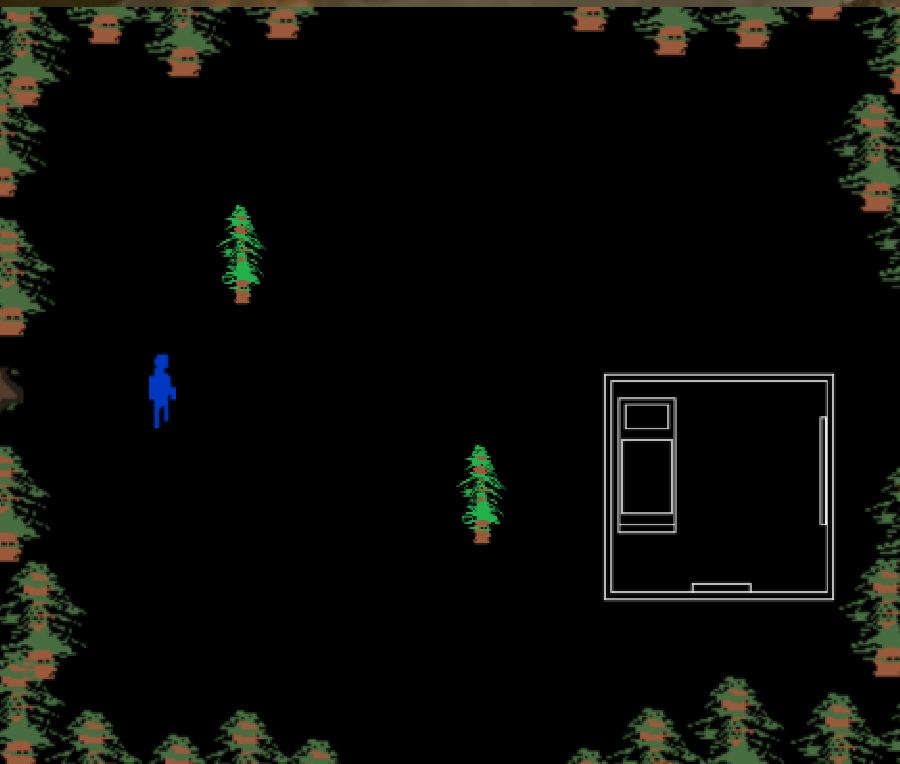
Gloomstalker - Horror Exploration
Gloomstalker was a short horror exploration game developed during my studies at Cal State East Bay as part of the Fall 2024 Semester, created in collaboration with Jessica Villanueva, Adrian Casarez, and Bulli Sot. Built in JavaScript using the p5.js library, the project was inspired by minimalist horror titles such as FAITH, aiming to recreate the unsettling tension of retro horror through simple visuals and player-driven discovery. Players navigated a dark, forested environment across multiple screens, gathering items and courage to ultimately confront a stalking monster. The objective for our team was to create a concise, atmospheric experience that balanced fear, tension, and player agency within a small-scale interactive project.
- Academic Course: Interaction Design Studio I
- Team Size: 4
- Primary Roles: Creative Lead & Programmer
- Platform: PC
- Responsibilities:
- - Defined pacing, tone, and key mechanics as part of the gameplay design
- - Implemented core gameplay systems such as health and movement logic, and itegrated visual assets
- - Collaborated with teammates to integrate their code into the master version and maintain stability
- - Created sprites for project and all background screens, implementing tree and house design from team
- - Presented finished game to faculty and peers for review and play
Design Process & Gameplay Showcase
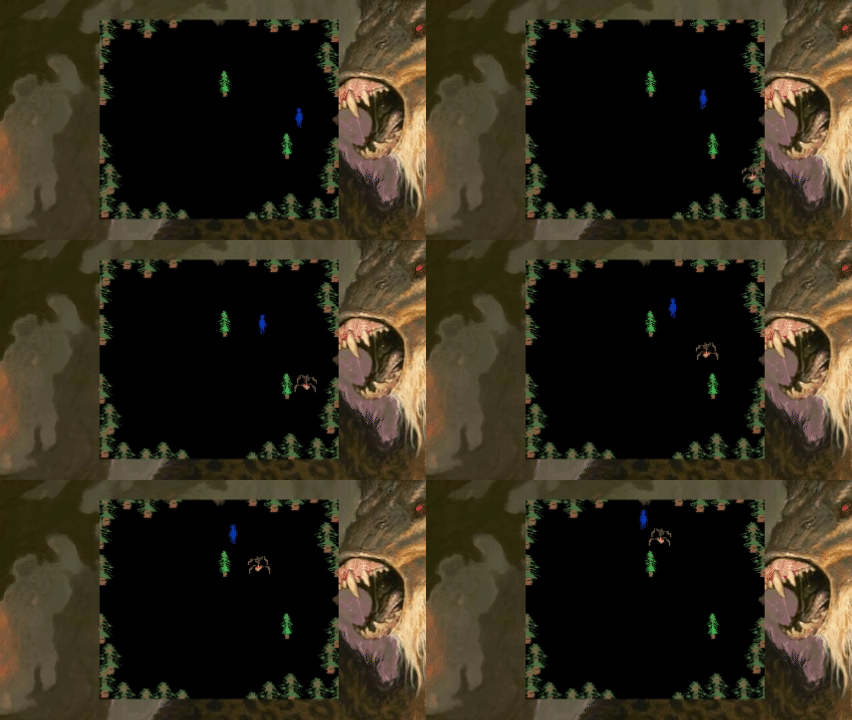
Hiding is considerably more effective than flight at this stage.
I structured the game around a series of screen-based environments, using p5.js to implement player movement, object interactions, and scene transitions. The design emphasized fear, the monster is designed to be rather unpredictable. There is a sound cue and brief visual reaction time to find a spot to hide, I wanted the player to actively feel fear as they scrambled to find a means to defeat the monster. Having to first solve a puzzle, to get a shovel, to dig up a hidden spot for a gun, all these were put in to give the player a distraction and motive. In progressing, they place themselves at risk, often needing to quickly drop a task to get into protection. All this prep-work, so that once they finally claim their gun, and the way to the final encounter opens, the player never loses that tension. To the end, they can't take a hit, and the conclusion forces them to practice all those dodging skills they built up during the search.
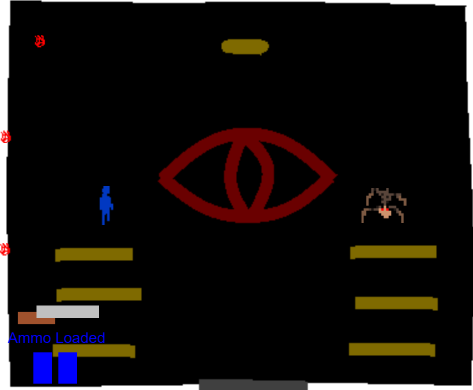
Screen capture of player facing monster on final screen.
Gloomstalker pushed me to really “make use” of a team relative to my earlier solo projects, to ask not just what I can do, but how to work within a group. While assigning everyone a task and forgetting is one way common in University, continually meeting to share ideas allowed us to collaborate in ways other students simply didn’t during that project.
In reflection upon this project, I think my greatest achievement was getting a crowd of university students to gawk and hide their eyes in presentation. There is a feeling of tension that guides your risk reward loop in this game I love, that solidifed my belief in my design skills. Considering what to improve on, I felt this project had a high reliance on borrowed assets, fine for an academic setting but something I quickly moved beyond in later work.
Credit for External Resources used in Project
- Certain sprites and music for this academic project originate from FAITH: The Unholy Trinity, including the tracks "Satie Gnossienne 1" and "Astaroth" used for ambient themes in the project.
- Most sound effects were sourced from freesound_community off Pixabay.
- Background image for site and inspiration for monster from illustration of John Tedrick.