Primal Edge - Action
This project represents the author's Senior Project for California State University East Bay during the Fall 2025 Semester, aiming to create an experience of pushing through risk in the form of oppressive enemies, paying off with freedom to chain satisfying combos off well timed entry. The project leverages frame data and other canceling concepts from fighting games to create a rewarding system to learn. Risk management is the key skill of the game, rewarding those who act with strategy.
- Academic Course: Interaction & Game Design Senior Project
- Team Size: Solo
- Platform: PC
- Responsibilities:
- - Implemented core mechanics such as combat flow, systems design, building for a 5-10~ minute playtime
- - Built internal tools to streamline encounter creation
- - Helped process prototype testing across multiple stages and integrated player feedback
- - Presented vertical slice both in-progress and complete to faculty and peers in live critiques
- - Created original art, and implemented external art/music assets with attribution
Core Design Appeal
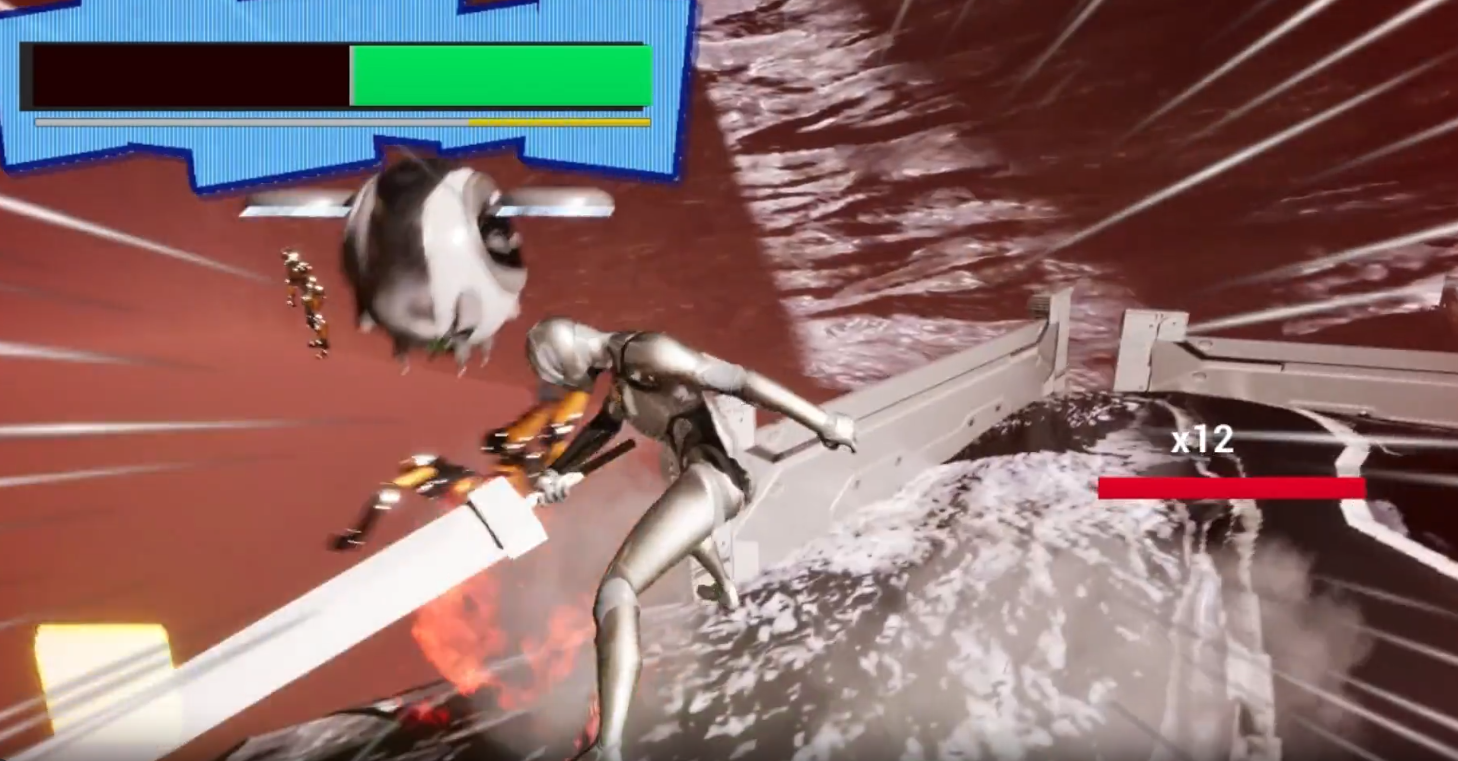
Keeping the combo going is one of our most important feedback levers for whether a player is 'efficient' in their combat.
When designing the gameplay of Primal Edge, it presented me with a unique problem to understand the core appeal of fighting games better. Something quickly entered into the design was the ‘combo structure’ of such games, allowing for good execution to let the player handle any situation in style. At least, in theory, but during playtesting the evident lack of a second player made me reflect on titles like Godhand as my own experience wasn’t coming together.
There, I realized the core to these designs is a ‘puzzle’, with an extensive toolset and combos one has to commit to, the most rewarded players are those who take time to plan a step ahead. To bring the players into this experience, I sculpted my second encounter after teaching controls to have far-away enemies with a line of gunners. These gunners will hurt a player who immediately rushes in without ‘baiting’ a shot, leading to a follow up by enemies. However, listening to the sound cue will let an attentive player move back the first time. Either way, a player who steps back will learn they can ‘lead’ the melee enemies away, starting them on the road to think strategically in fights, or to find another solution their own.
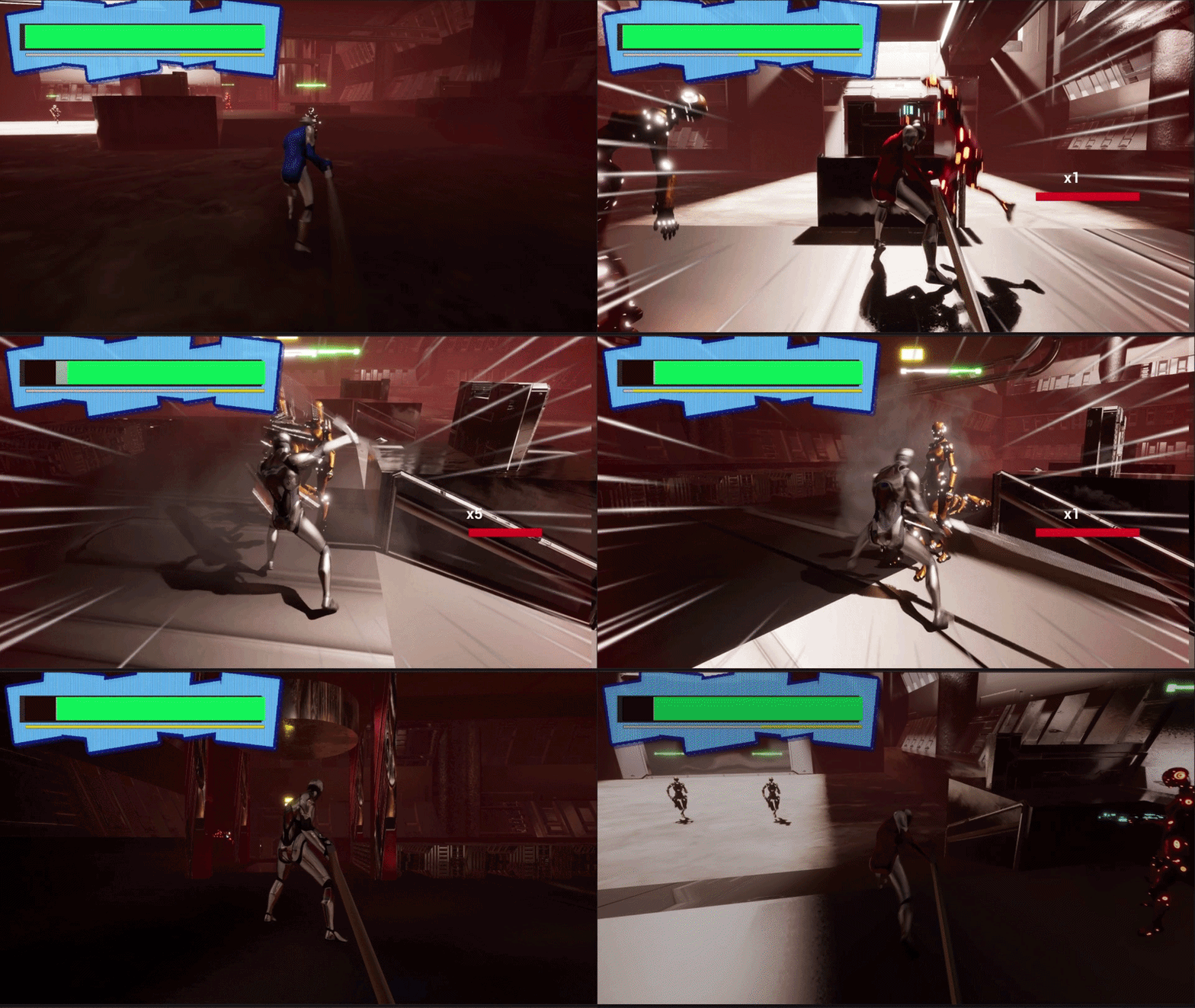
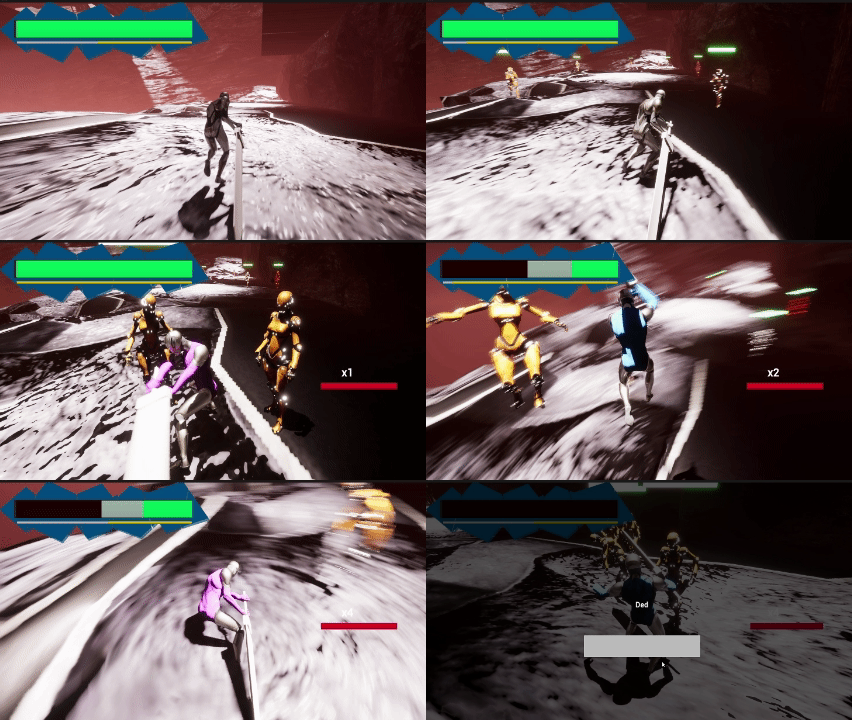
Gameplay playthrough, split into the three primary segments.
Full Design Process
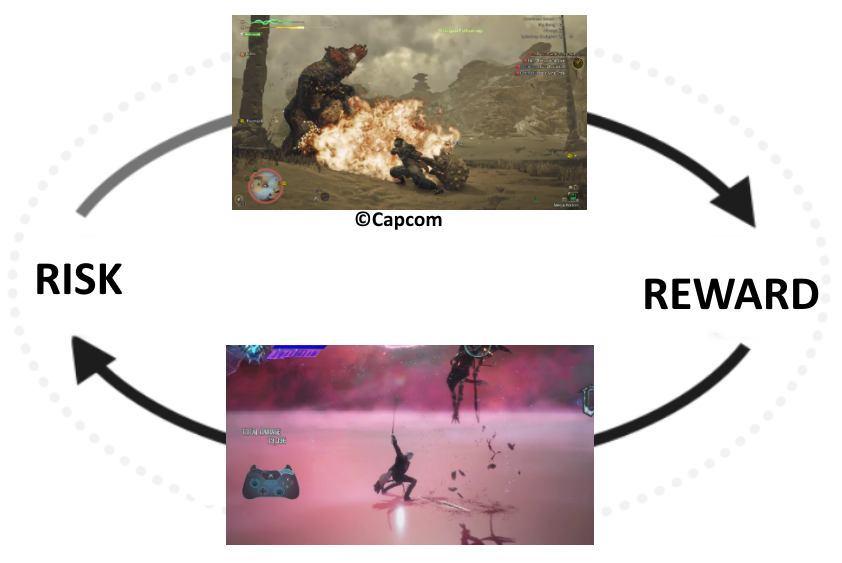
Risk/Reward Loop Diagram, I wanted the anticipation of approaching a monster to pivot into a new position of power once a hit did land.
To bring the concept to life, when first prompted to think about what I wanted to do for my Senior Project I went to try and analyize what I loved about certain other game's design, put in one game different appeals. I had a curiosity as to how 'slow' gameplay is often rewarding in same games I enjoyed, and in this approach the Risk and Reward loop of this project wound up drawing from the primary inspirations of Monster Hunter and Devil May Cry to create a unique cycle. An experience from Monster Hunter shared with some other titles like Dark Souls is that slow pace, of working to try and find an 'opening'. The Risk and Reward here, from getting clean 'meaty' hits upon foes or else suffering a heavy blow. Devil May Cry meanwhile, attempts to create a power fantasy with highly dynamic combos, leaving the player fairly commitment free. This project aimed to lean into two states, where a clean hit will allow the character to gain significant advantage in speed of frames. This way, a steady loop of making a risky play for an opening, rewarded by a period of being able to chain a large combo, repeating then on. In core “game essence”, the philosophy wound up being for feelings of 'rebellion against adversity', working through harsh enemy line ups as you gradually take control of the fights. The combo system is structured similar to fighting games, utilizing a combination of normal and special attacks in mind to frame data to link damage. This has led to the Cyberpunk aesthetic with similar themes being pinned as a visual identity, combined alongside a conceptualized contrast of a beastly protagonist against machine enemies.
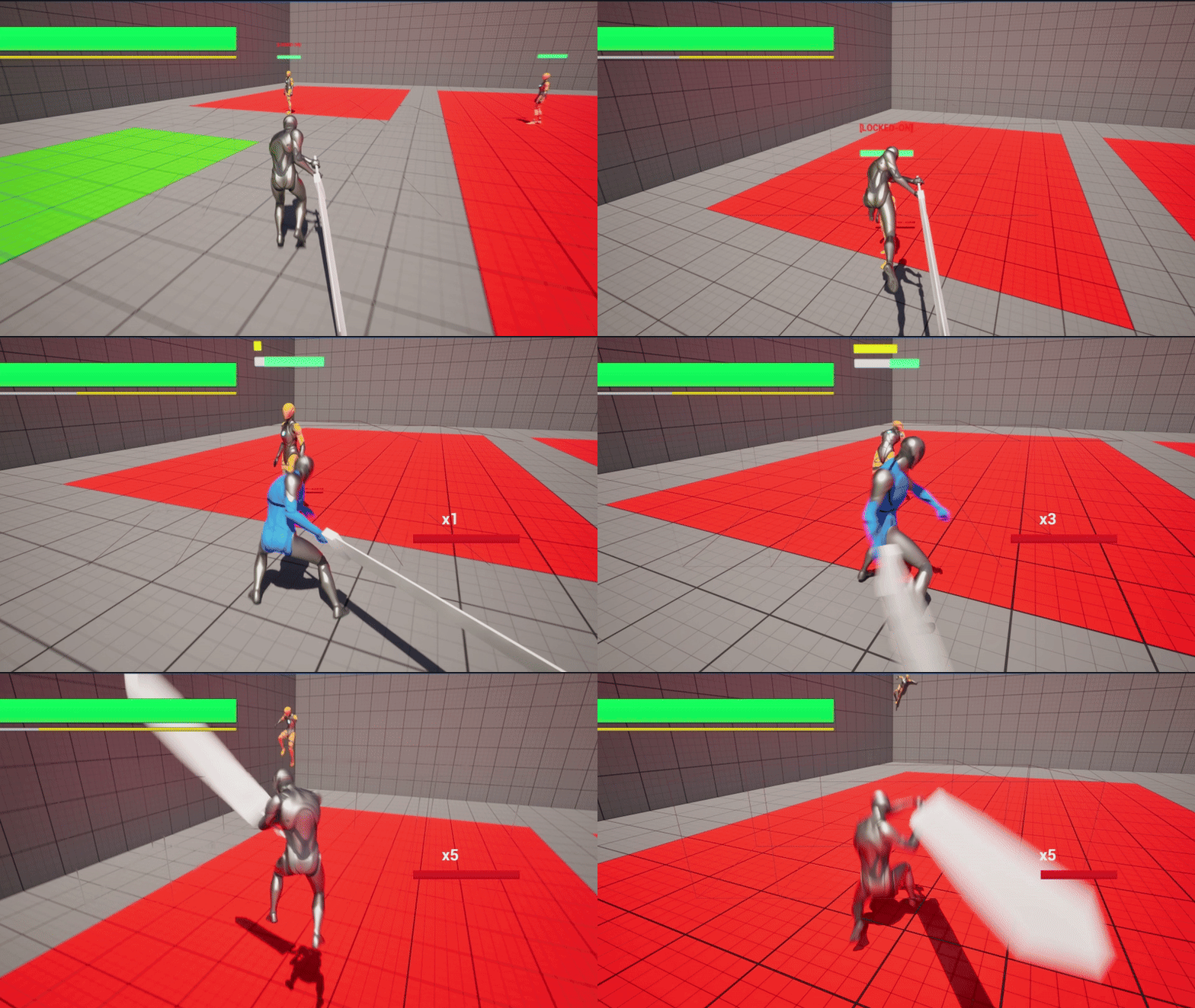
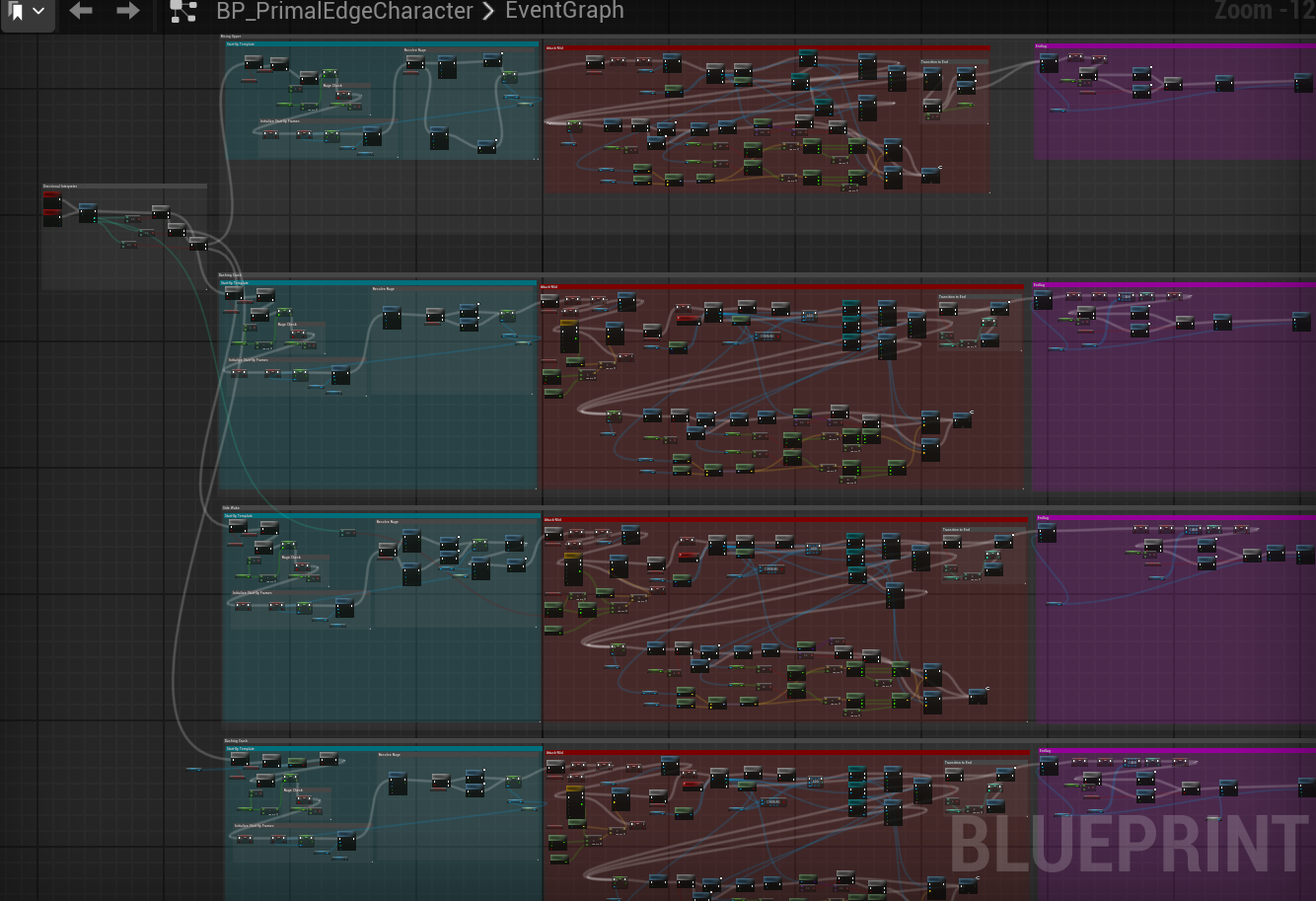
Early prototype footage of attack interaction testing, predates first playtest. Credit to space.bar.anim for Player Animations in this project. Example of how much blueprint work goes into the special system as well.
One of my first issues in this project was selling 'impact'. When first creating the larger moves in this project such as the 'Rising Upper', while damage and stun add a lot, with a meaty sound, I just couldn't manage the feel I wanted. Adding a slight time dilation helped, but still in the earliest playtesting the impacts simply felt 'off'. Through feedback, I realized it primarily lied in the sound design, while sounding heavy and realistic for a 'metal on metal' impact...it wasn't satisfying. By opting for a far more exagerrated sound effect, players were able to get into a 'tempo' with their combos, finally getting the result I want.
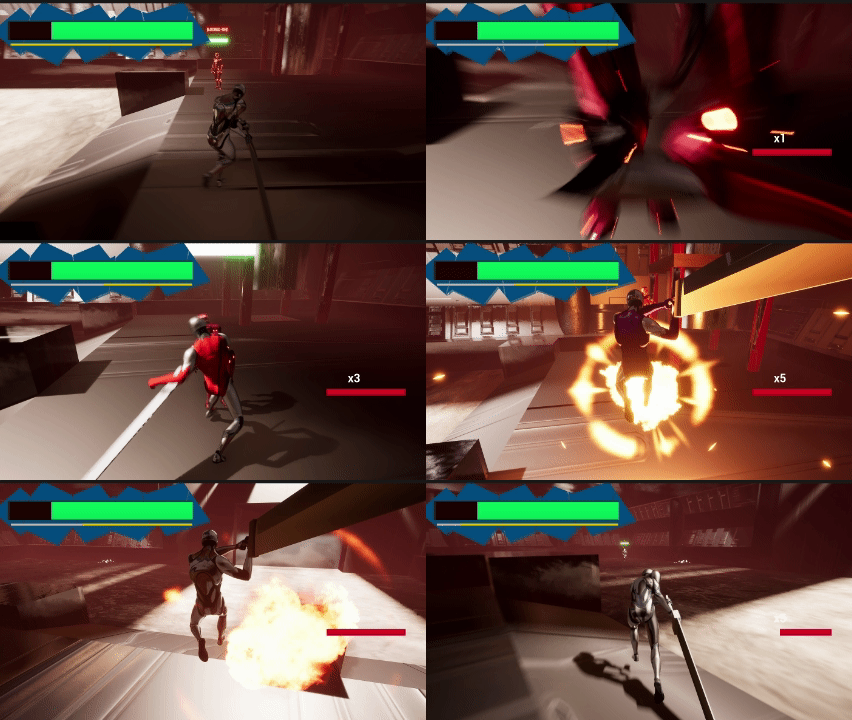
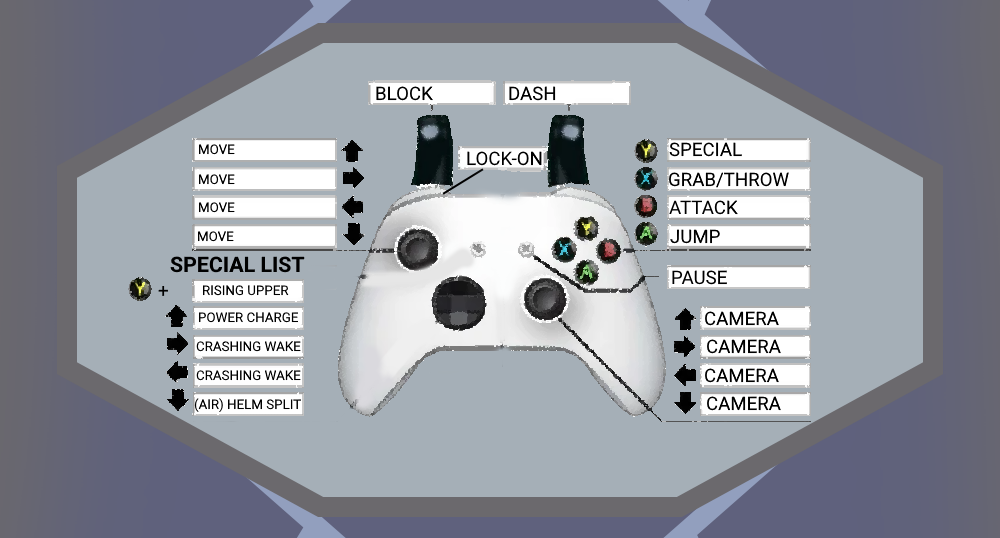
The first showcases an example from later in development, when the additions for hitstop and feel helped make clearing a wave come together. Second is an example of the controller layout, accessible in-game.
When first designing the moveset, I charted out each special move by move. The best specials serve distinct 'purposes' in fighting games beyond damage, such as achieving a particular position or zoning. Through this lens, I designed the gameplay actions to achieve different goals in engaging our reward loop. The basic attack chain is consistent, though low movement makes it vulnerable and unsustainable without using specials to reposition. Grabbing and throwing is incredible for racking up stun, but can be interuppted with damage. Dashing gives a burst of movement, but the endlag is high asking one to properly combo.
The specials were of particular attention, the Neutral Special is a rising 'Dragon Punch' style attack meant to drag enemies into the air. Power Charge is a forward short dash with a hitbox, alongside Crashing Wake they exist for crowd control. Finally, Helm Split exists to give air combat a more satisfying route, crashing into an Area of Effect. The thing that signifies all of these specials is that idea of 'crowd control', pushing players to use their stamina wisely to manipulate not just themselves but enemies as well to achieve success.
Of course, what ultimately draws all moves together is the 'Rage' mechanic. When the player achieves a hit on an enemy, they are enhanced with additional speed and far faster frame data on all of their attacks. While the Combo Timer persists, they can initiate these enchanced moves, represented with a red tint and speedlines coming down upon the screen.
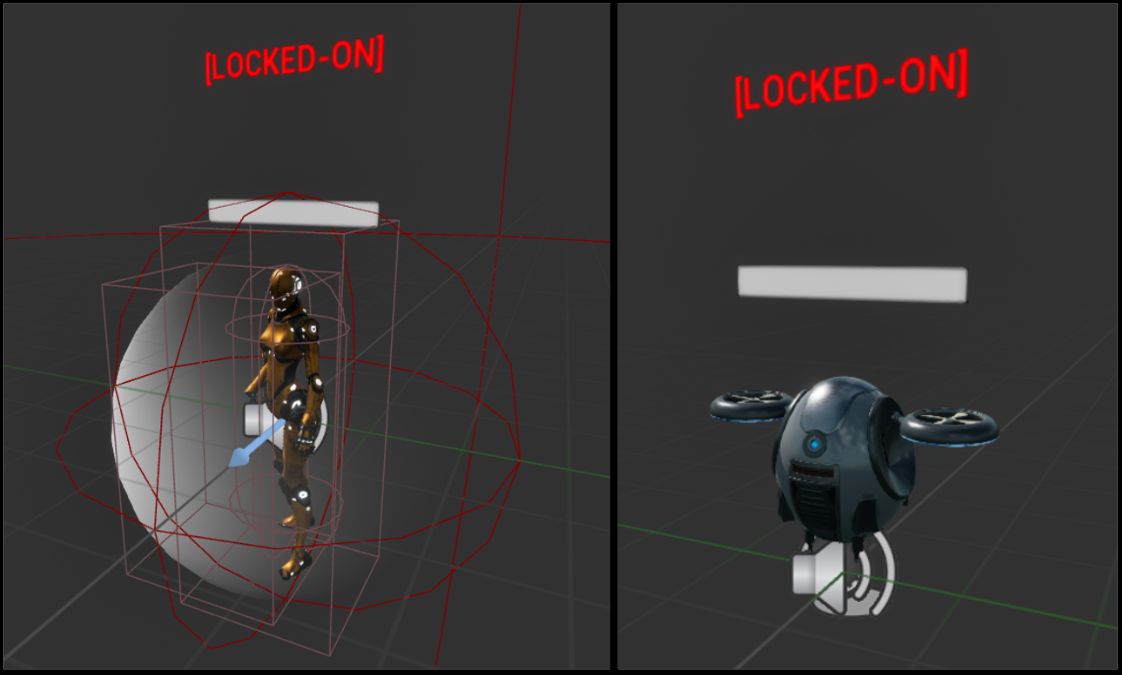
Melee and Drone enemies in editor, enemies utilize hitboxes rather than relying on skeletal meshes. The gif showcases how enemies can stack on stun, which will ever end a combo or life. In several ways, this may actually be a crowd management game.
There exist three types of enemy in this vertical slice, each serving a different purpose in engaging the player. The Melee Enemy uses rapid melee attacks, charging the player fairly blindly. They exist to work in mobs, interrupting the player and punishing them for miscomitting to a space. The Ranged Enemy meanwhile is a red-colored variant, wielding a rifle in their hands. They will fire energy shots with a very audible cue, forcing the player to dodge, utilizing various Nav Mesh Objects spread across the environment to navigate to a space with line of sight on the player. These energy shots relative to the melee, hurt a lot, but can be made to hit an enemy instead. Finally, the Drone is introduced in later combats, making enemies invincible when it reaches them. This one asks the player to engage in the air, and carefully navigate around an enemy they can't immediate retribute against. Clever players will realize the invincible enemy isn't immune to knockback, allowing their crowd control specials to still 'function'.
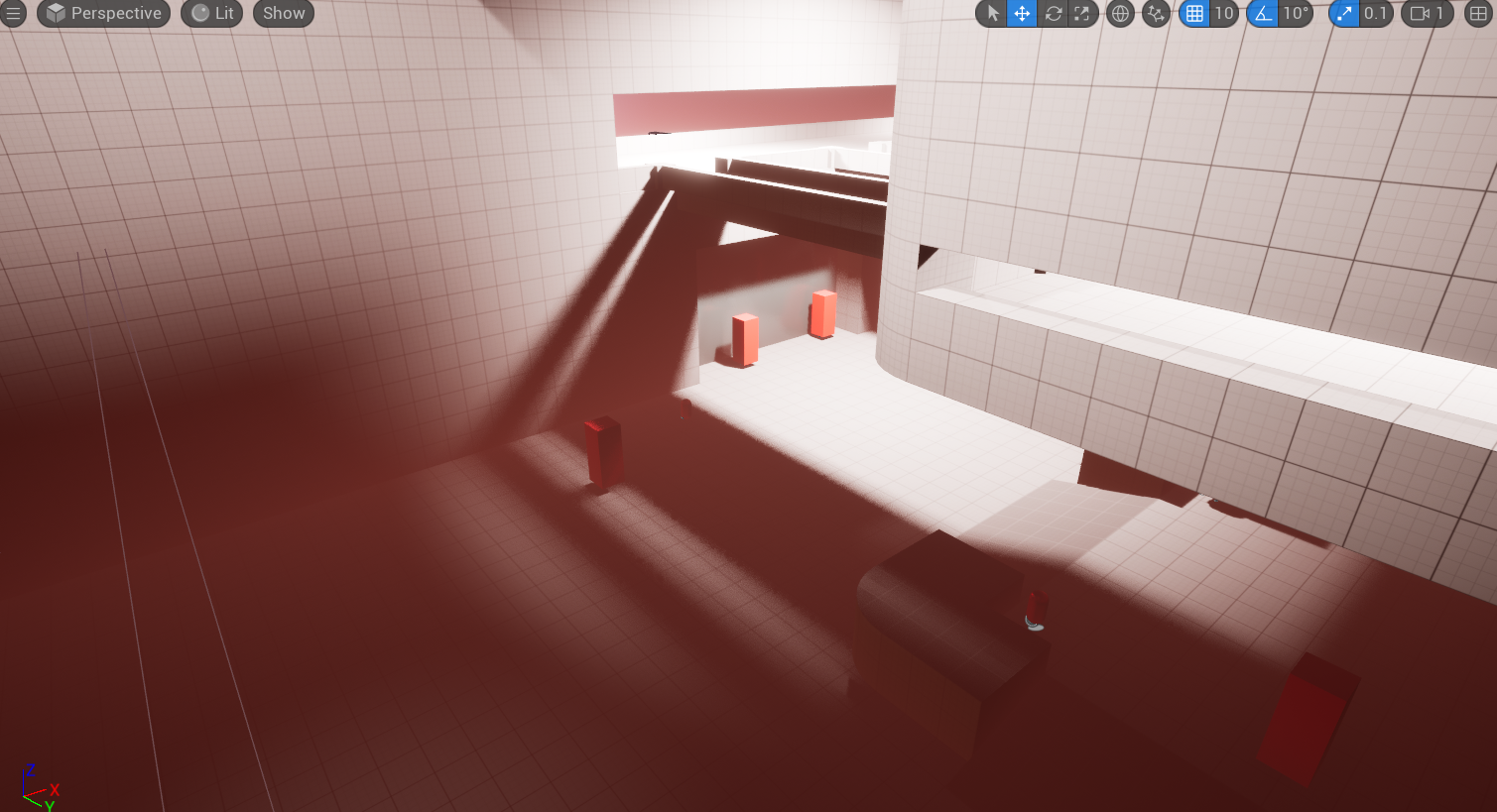
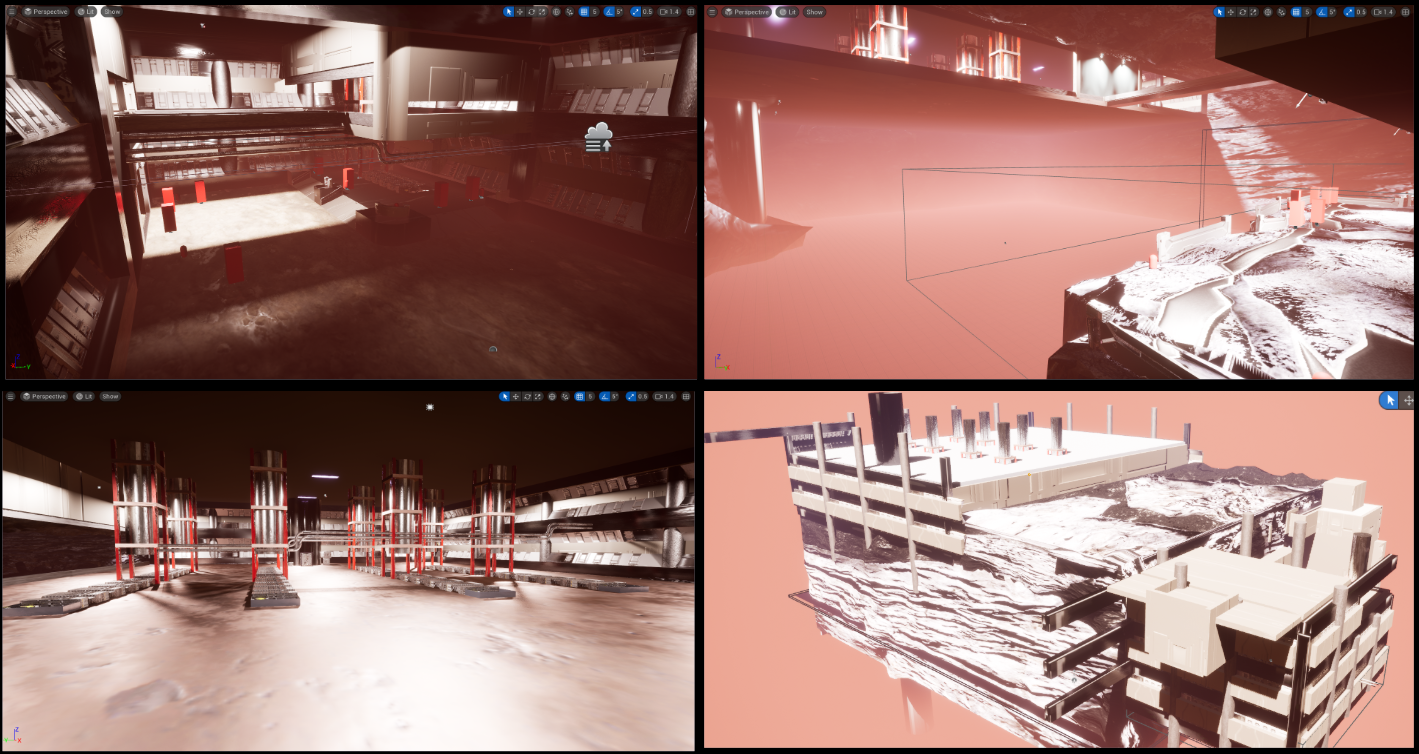
An overview of the map at large as it was built in editor, the red rectangles represent spawn points for enemies.
I began with a block out of the level when first designing the final iteration, saving work on visuals after gameplay had settled. The visual identity was achieved with an ambient red visual, utilizng props and materials from Olivier Garrigue's Sci-Fi Prop pack alongside work in Unreal Engine's modeling tools. To keep player flow, the level exists in a fairly linear structure, encouraging the player with a permanent run while out of combat to reach the next area. A prominent time slow ensures end of rounds and combat are noticed, along the usage of a TTS voice to give sound cues as the player rampages.
The first area was designed to exist as a tutorial as the player comes down onto the factory floor, lacking any drones and instead leaving the player with mostly melee enemies to contest. A piston object exists here, the first hazard the player can potentially utilize for fast kills. Isolated, it is fairly safe for the player to navigate around, it is mostly to their benefit.
The second space exits out with a view of the end objective, the space elevator the player will need to take to escape far out above a chasm. To reach a stairwell, the player must engage in pushing through a narrow space with multiple ranged enemies ahead. This is where we ask the player to think ahead, as committing to the wrong attack here with the higher quantity of ranged enemies ensures pain. A large chasm next to the player offers another hazard to utilize, though loses them the chance to use an enemy to stun others.
Finally exiting out to the top of the foundry, the many lines of pistons beat as the worst waves of enemies comes upon the player. The area is actively hazardous and difficult to navigate around, asking the player to apply all their movement abilities to successfully catch out enemies. Succeeding here allows the player to finish this level, leaving through the elevator as a stat page pops up.
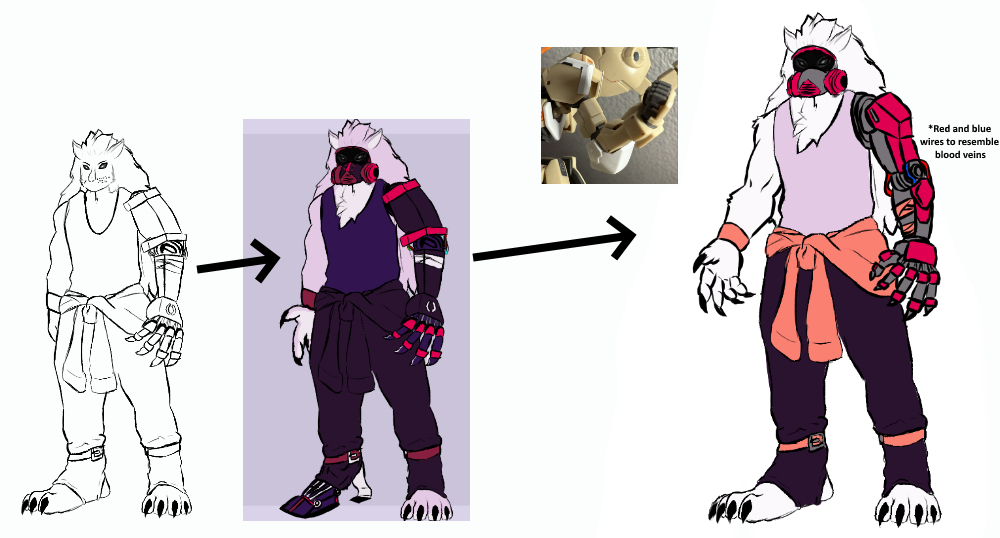
Phases of iteration on the character, who informed several gameplay concepts such as picking up and throwing enemies.
While high quality 3D asset creation exists beyond my current skillset, digital art and character design does not. As a side project during physical development, I gradually iterated on various waves of feedback for a proper protagonist. Existing as a beast to contrast the mechanical enemies, their plot hook exists as a spited worker. Playing off current themes of dissatisfaction with capitalism, the game exists to fulfill an idea of simply lashing out. Thus, a beast made an avatar for the player to act out through. The arm proved the most technical challenge on my end, until I took inspiration from a model kit upon my desk that allowed me to achieve the shape I wanted.
Conclusion
The project concluded with a full vertical slice of a level, rich options for attacks, and a managerie of enemies to fight through. Hitting my projected mark for playtime well, the project was one of the toughest pushes i've ever had in my work. Balanced alongside the initial creation of this portfolio site and all the other stressors of a senior semester, nonetheless I am glad to have met my deadlines. I feel i've been made to confront much of my own ill habits, and gained a certain new level of confidence in my craft. A gameplay demonstration is compiled below, split into three seconds for ease of upload.
In reflection upon this project, I think on my favorite aspect is how it pushed me to organize and adapt my blueprints into something highly adaptable and reusable. In terms of a move, I think my best success was with the Helm Splitter. It feels weighty and impact, and players in playtesting certainly loved to spam it as much as I. In terms of what to do better, difficulty trended high in playtests and critique, with one of my more consistent sources of feedback actually being in regards to sound design. The music is overbearing to many, dropping the default range while generally balancing out sounds would be amongst the first steps of a second visit. Though truthfully, I think above all else this project has given me a new motivation to figure out 3D Modeling. Turning the protagonist design into a fully realized model is a high likelihood for a future project of mine.
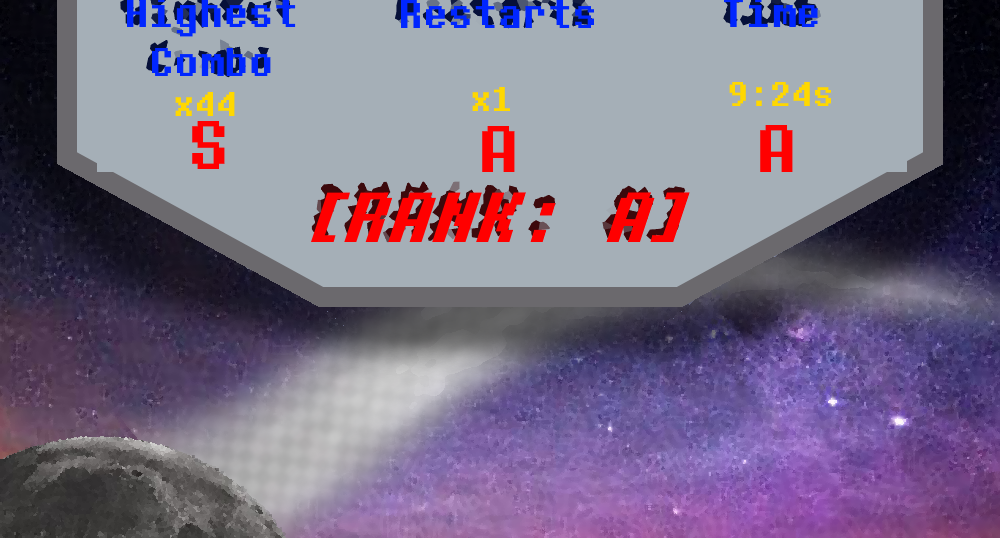
Stat display on endscreen
Credit for External Resources used in Project
- Several 3d Models and Materials come from SDKwarrior, Olivier Garrigue, and Glowbox 3D and on Fab Marketplace.
- Most sound effectsfrom freesound_community, Floraphonic, DavidDumaisAudio, Universfield, AudioPapkin, and LordSonny off Pixabay, with music from Killer Instinct (2013) for Type-3.
- Most character animations originate from the Great Sword Animation pack from space.bar.anim.