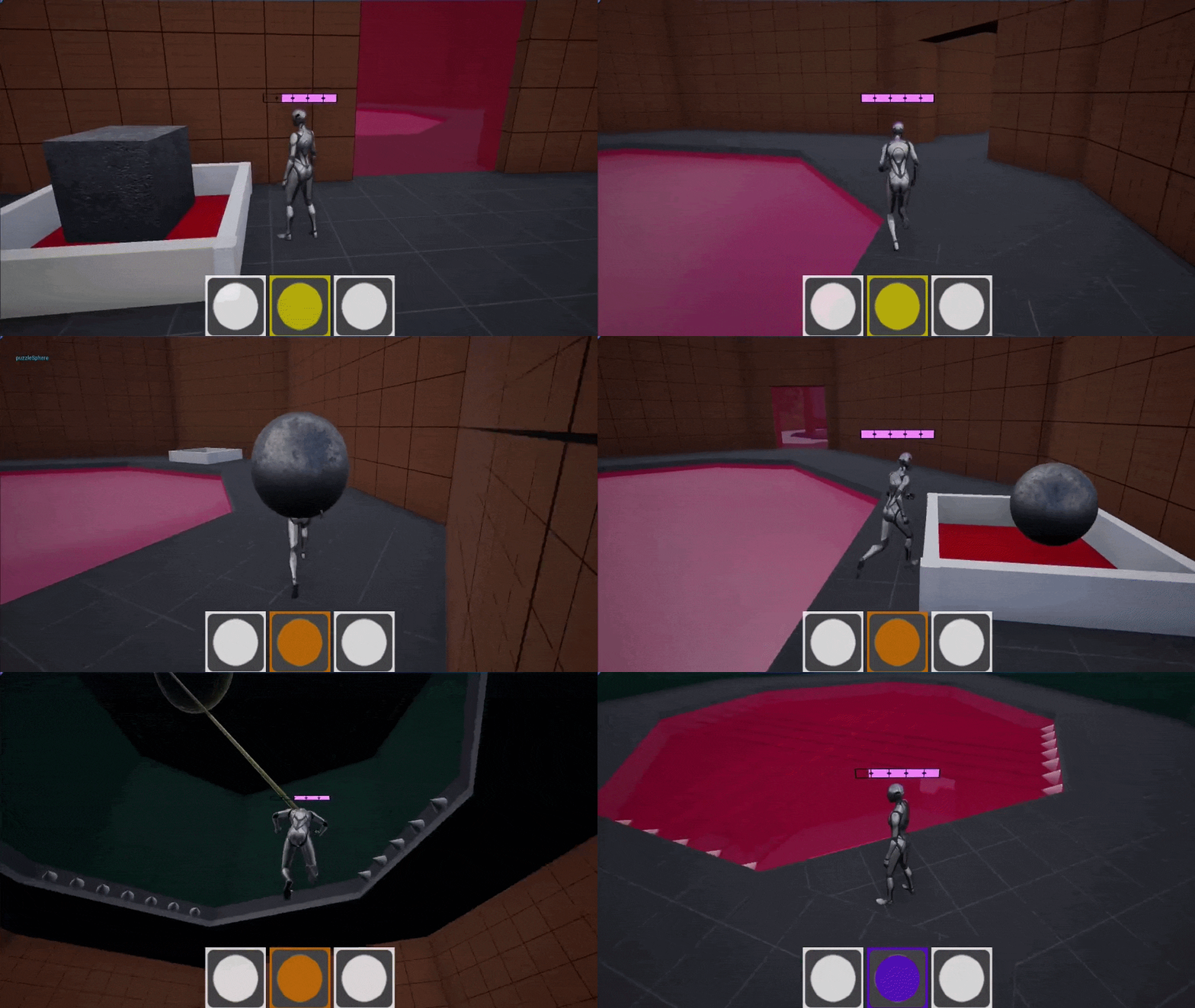
Ruin Game (Title TBD) - Action/Puzzle Platformer
'Ruin Game' is a personal project being developed post-graduation, utilizing Unreal Engine V5.4.4. This project began with the simple thought of designing a game where combat is not the primary focus in order to put myself on a different path, leading to brainstorming on mechanical ideas I'd not reach otherwise. As I considered my favorite non-combat aspects of games, my mind went to the movement of games Deadlock and Super Mario Odyssey, realizing the core mechanical skill of these experiences is that movement skill, carefully clambering over terrain through gradual mastery. This developed into the core idea of Ruin Game, exploring the evidence of a civilization long past with the theme of curiosity and discovery, going from wary wayfinder to dexterous speedrunner of a level. To enable this gameplay fantasy, I thought of the recurring ‘tether’ ability seen in games of this kind, and realized expanding that into a ‘yoshi tongue’-like character trait both provided a bit more personality and opened up puzzle manipulation options. In terms of speed and flow, the movement aims to center a feeling of ‘momentum’, further reinforcing rewards for familiarizing oneself with the map through discovery and exploration.
Imagining my current scope for the project, my initial priority is to iterate and refine the core gameplay loops within the first designed level, but beyond that i’d like to create a vertical slice involving three fully featured levels and a ‘hub’ world. Each of these levels would consist of several ‘missions’, allowing the player to accumulate progress through different skill challenges, shown in the form of an explorer’s journal filling over time with lore on the level’s location. My idea is to impart that core feeling of ‘discovery’ in this game, toying with puzzles to figure out the best path, filling out a book with logs of the journey, and uncovering hidden missions as major rewards to that curiosity I wish to draw out.
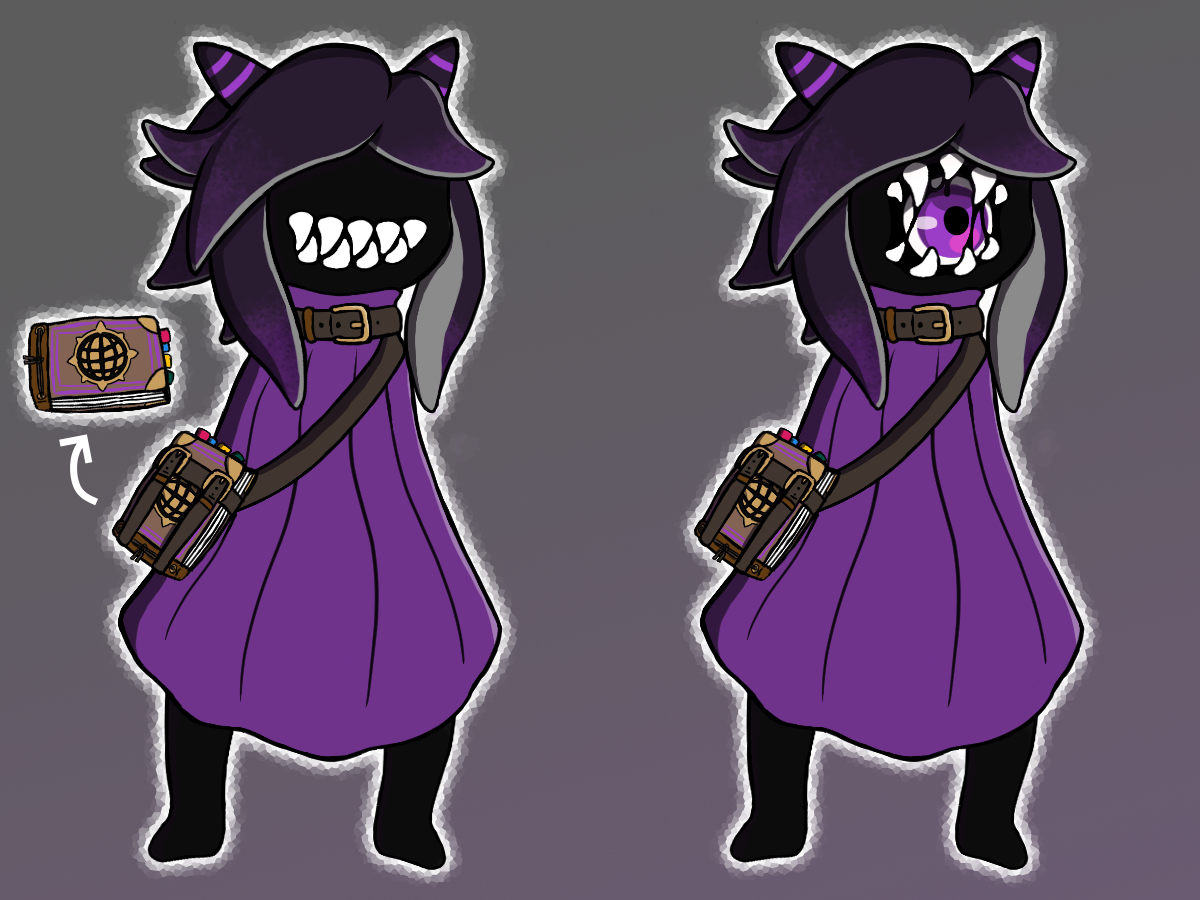
Early potential Main Character design work, a somewhat aquatic, somewhat ambigious creature meant to read both curiosity and mischief.
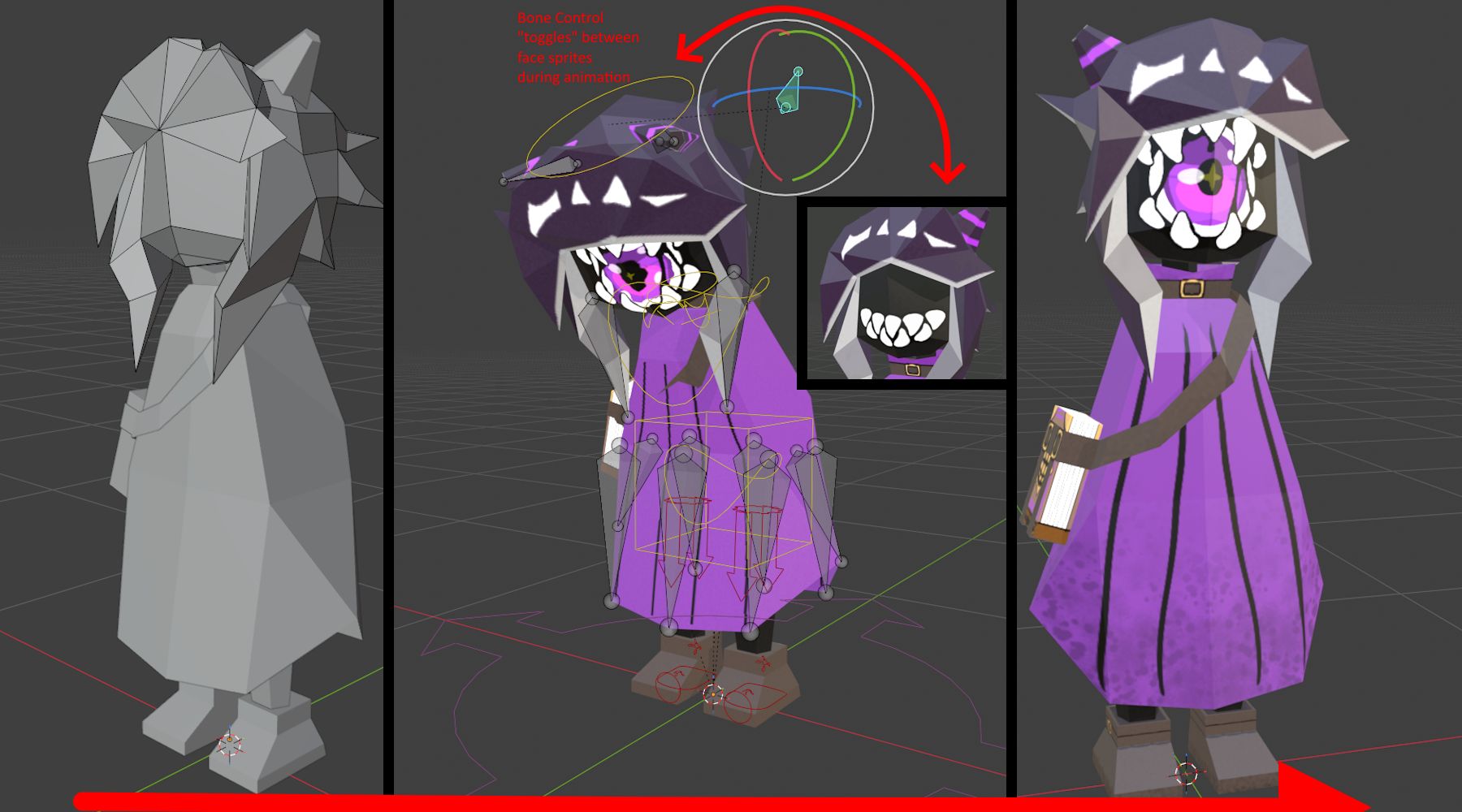
In development and ongoing first model, being actively tweaked.
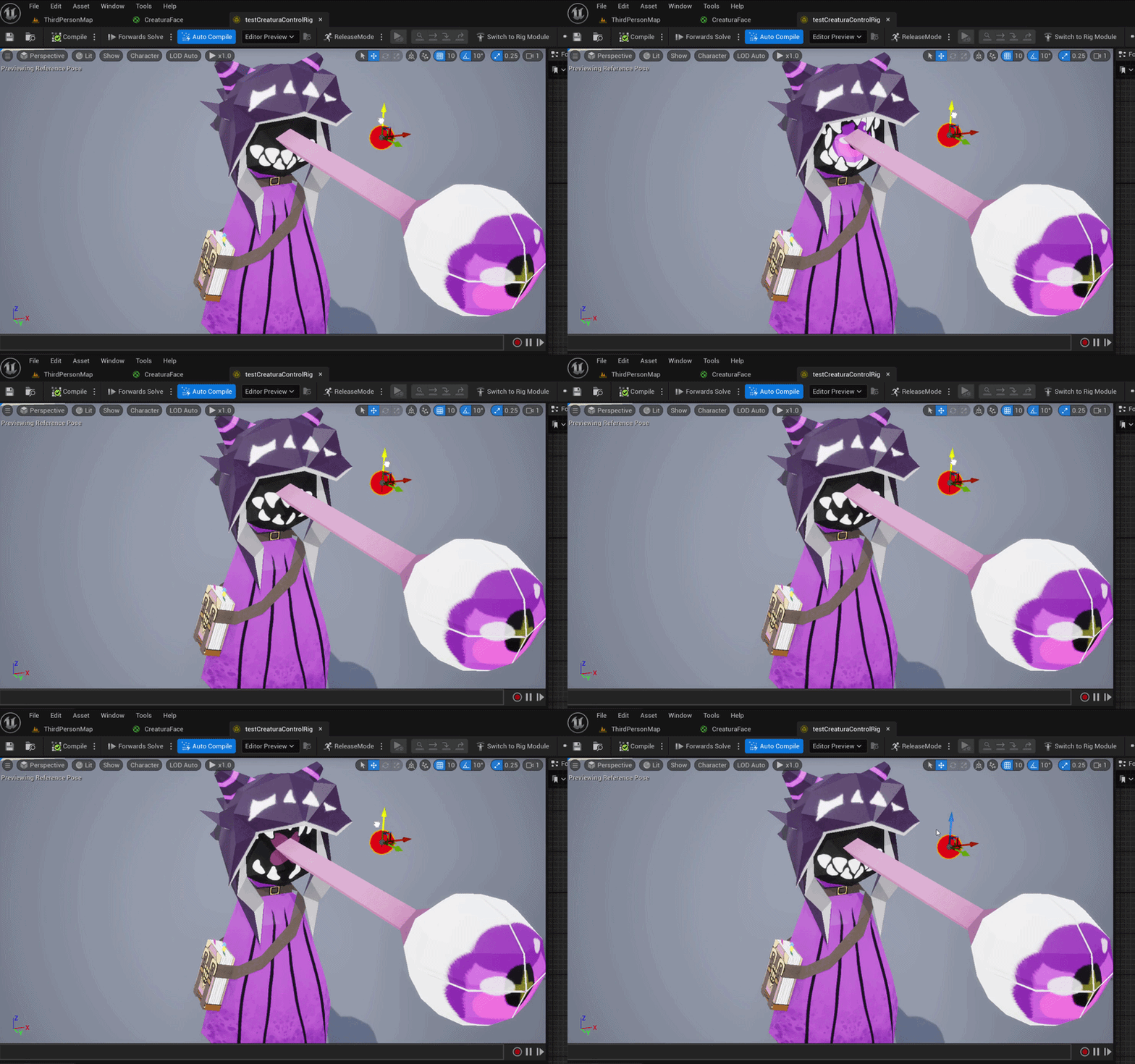
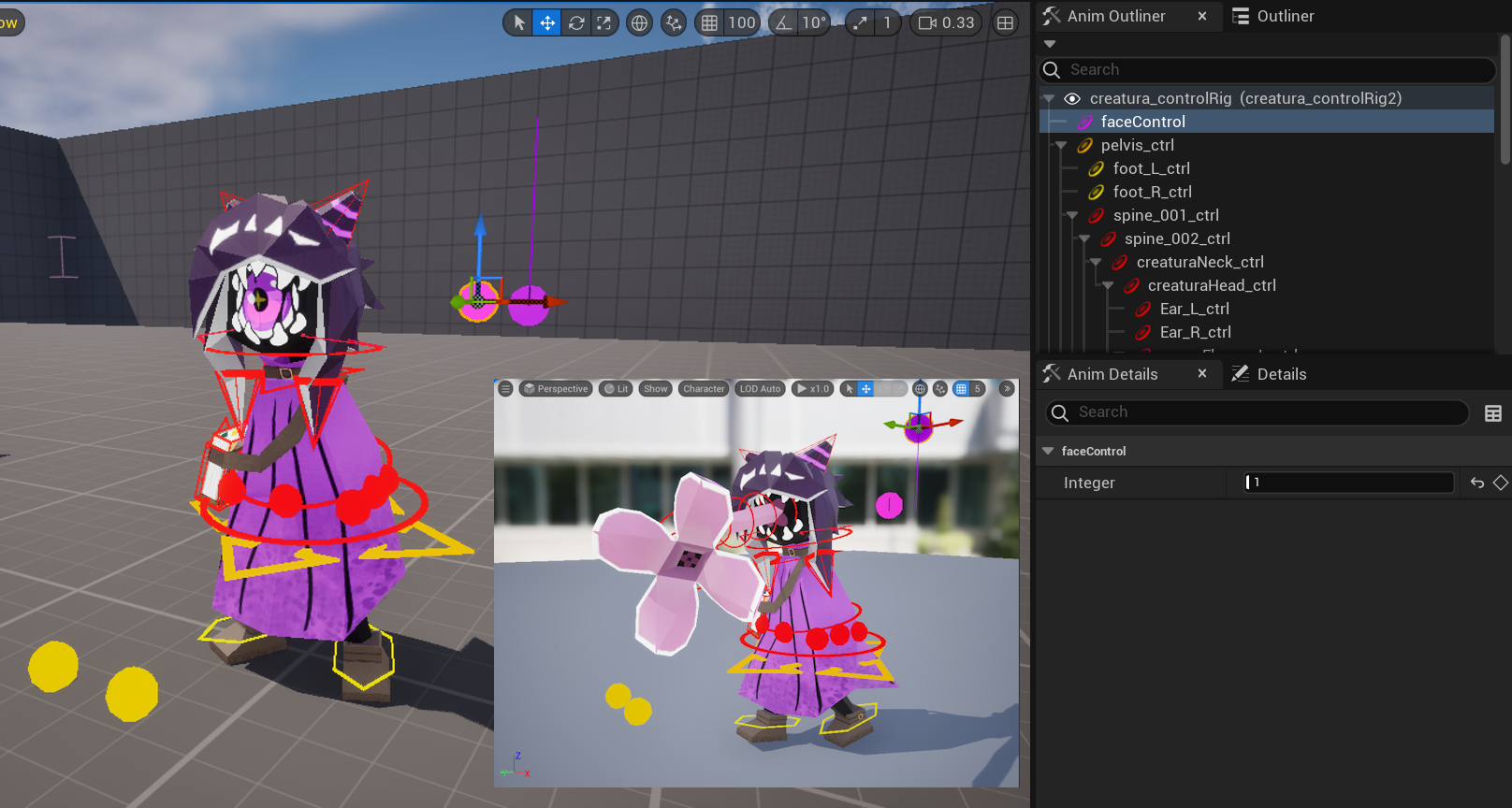
The face acts like a 2D plane I shift the X cordinate on with a Control Rig Control, letting me animate it within sequences.
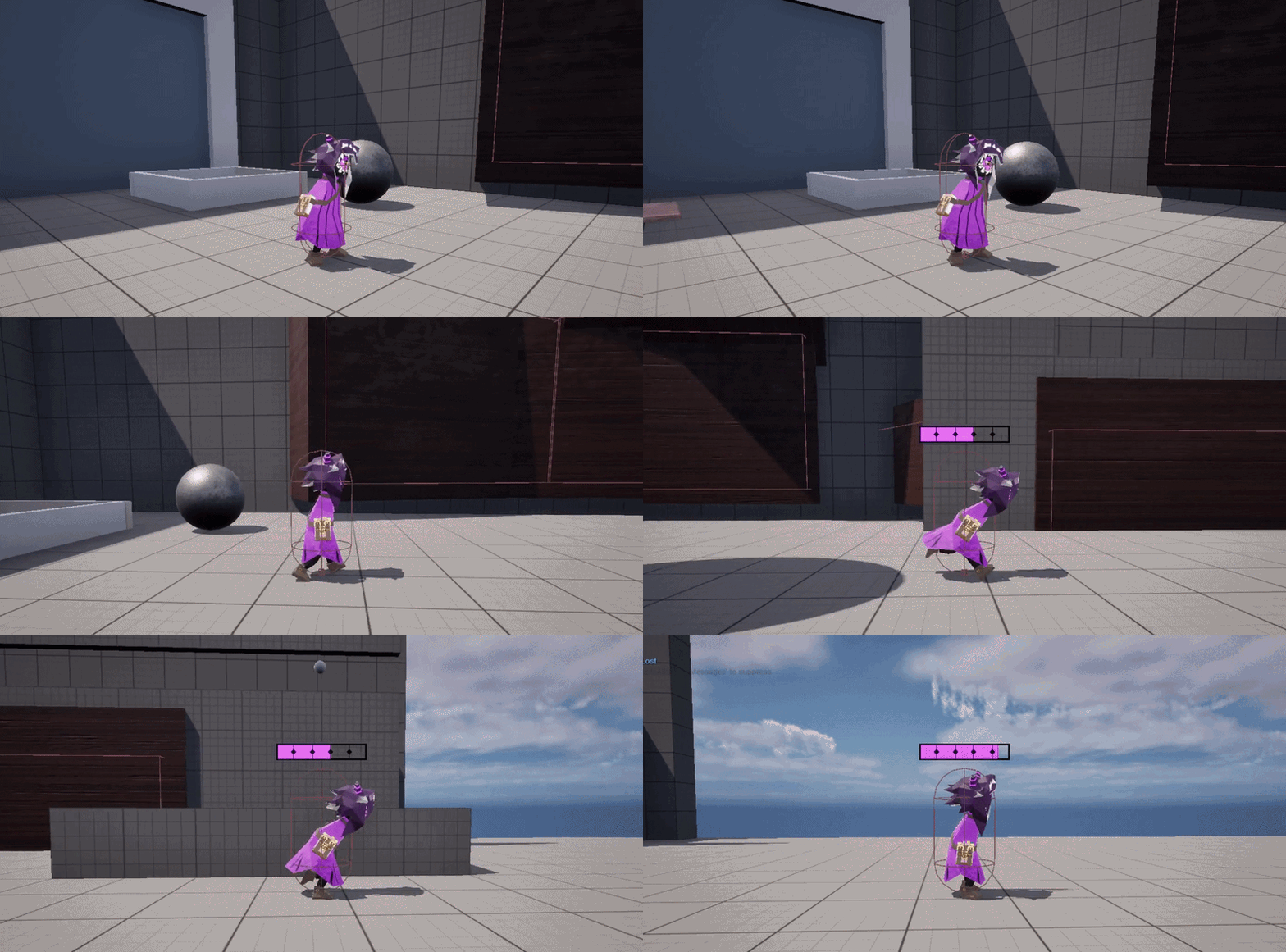
Early Creatura Animation
Core Design Appeal
When considering recent trends in gaming, and what would more specifically appeal to the hypothetical user base of this game, my mind went to movement systems. In Sonic Adventure, even the Treasure Hunting stages were built with the aim of getting faster in mind. And rather than it necessarily being an exchange of pure skill, I find the heart of these experiences, and what guides this project's development is the joy of ‘discovery’.
Truth be told, most of the work required in achieving the top time in any game’s system is merely routing correctly, choosing the most efficient path. There is only so much skill that can overcome simply cutting out an unnecessary visit to a room, or in other words one's ability to improve is a matter of discovering more about the level. I built these ruins in mind with that concept, the myriad traps allowing a player's routes to explore to be truly vast. If a particular key is a nightmare to grab for a particular player with the others picked up first draining time, the path of taking it first presents itself. Each system layers on this idea, missions offering a further variation upon the level to solve, progress presented as a guidebook filling up to let players experience the world’s lore as an archeologist, with a more open level selection structure allowing players to initiate their dives on their terms.
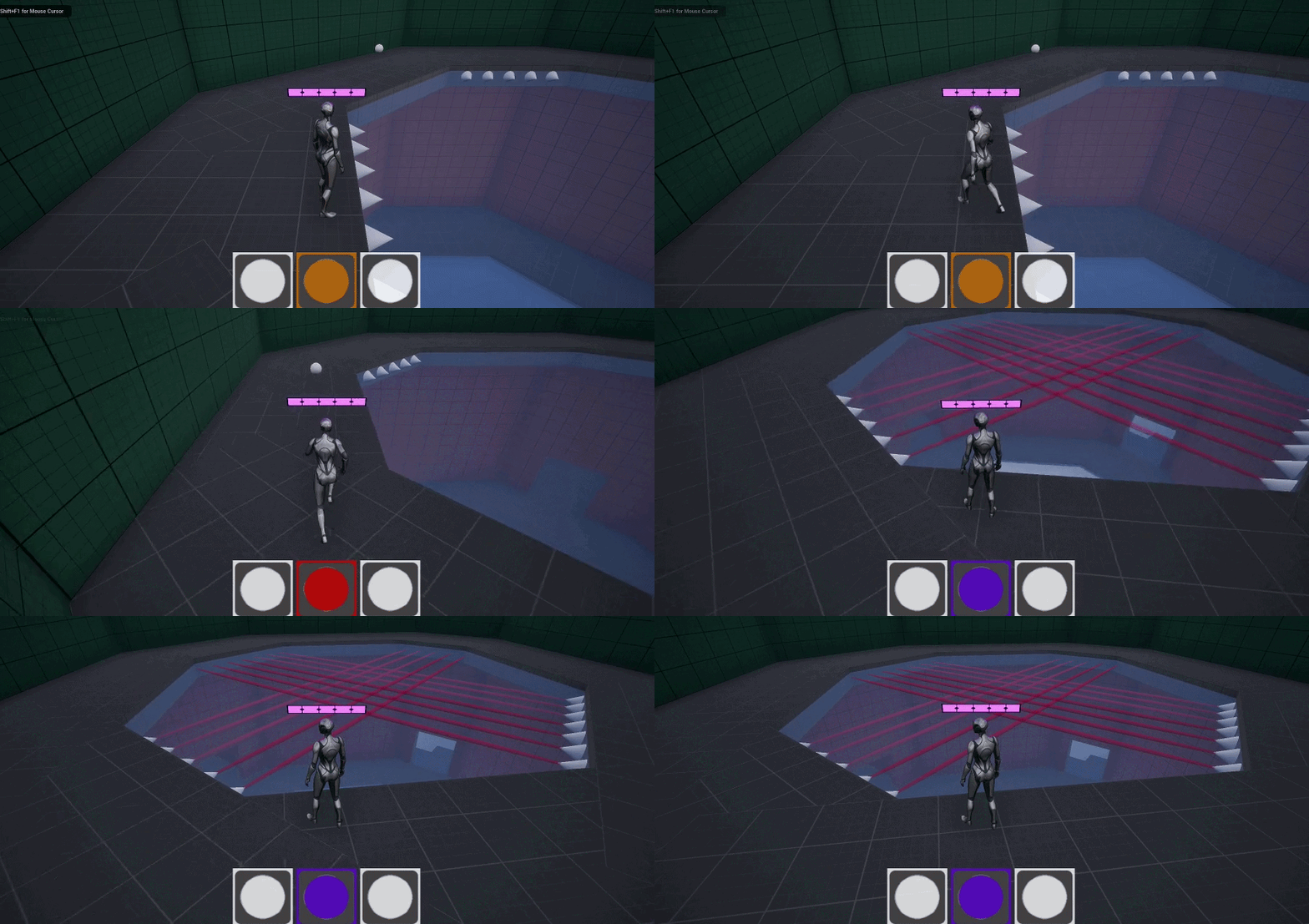
When collecting a key, traps activate throughout the level. To make the consequences of our actions clear, the type of trap it'll activate will be heavily prominent in the keys immediate vicinity.
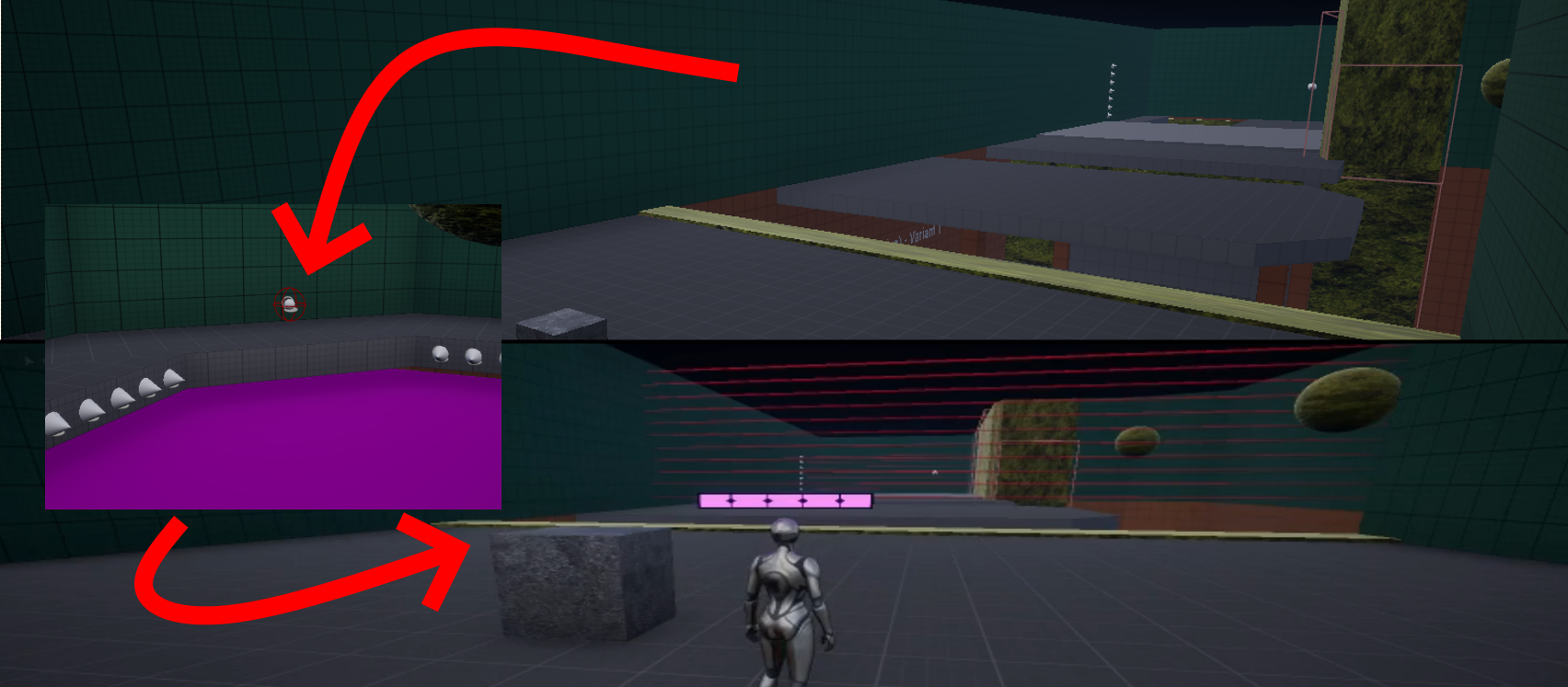
In a 'main' collection level, the solutions to acquiring keys rapidly escalate as traps activate. For example, here to take the box across the 2nd floor, what was once two jumps becomes a multi-floor box transport (It's good to mention the player cannot climb that mossy wall while holding a cube).
- The Design Process (Is Ongoing) -
An extremely early prototype showcasing the concept, and a start to end level flow.
With most developments coming off notepad ideas, the current scope is to create a vertical slice of the first level, with associated mission variants and a push for 'visual polish' relative to my previous work. Reflecting on Primal Edge, it shows off much of its roughness, the visual identity having taken a backfoot due to immense mechanical demands. Part of my desire to draft a game concept where combat is not a big feature, was to push myself into this artistic end. As mechanics become more finalized, extra work will be given to developing the visual identity of the game. Currently, prototyping of main mechanics and an initial level greybox is underway in Unreal Engine 5. At this early stage, much of the potential identity is still being shaped, though the central pillar will lie onto the preservation of momentum.
One can immediately tell the difference between the experienced and new players in Deadlock by simple movement, the tell tale signs of their comfort with the map and preserving speed. People often view Mario Odyssey as a purely casual experience, and yet they will meticulously perfect their movement much like a Smash Bros Melee enthusiast practices a wavedash! In defining the core appeal I wish to impart, this project aims to capture the experience of perfecting movement. By allowing players to navigate freely, and tackle keys in a level in their own order, I aim to impart comfort with the space. The aesthetic of a ruin, a dungeon, a space to be explored and discovered drew to me for expressing that ideal. In a further refined sense, discovery is the root of this experience. By allowing the playspace to dynamically 'evolve' adding complications to the player navigation, we can both reinforce that theme with anticipation of what is to come. The space is at its most dangerous, aesthetically active, and demanding when the final key remains to collect pushing a high note to end on in a scene.
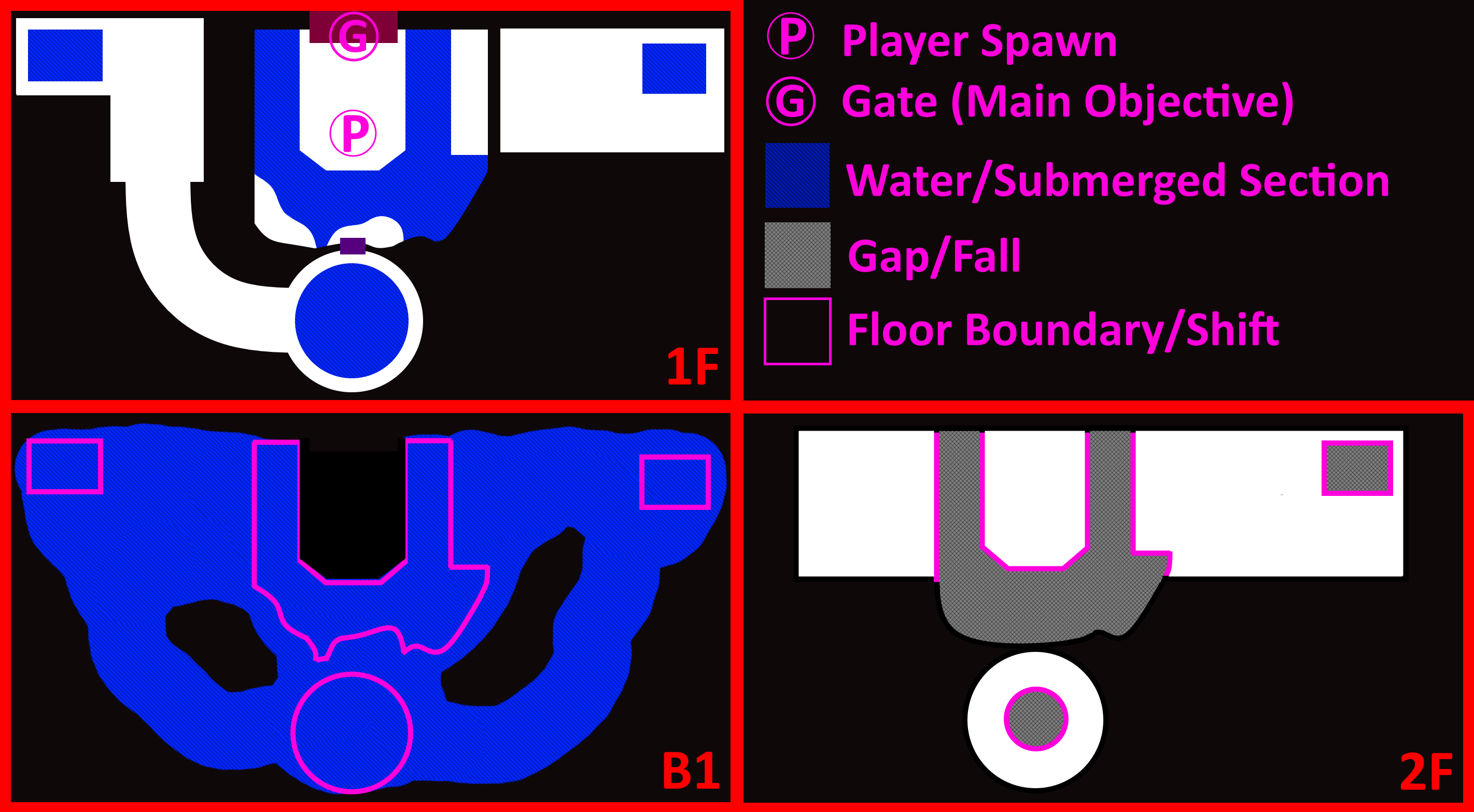
Earliest design layout for the first level.
A typical level would see the player navigating various floors of the ruin, with this first level in particular forcing an immediate use of either swimming or climbing/tethering to reach a different room. Initially I had the idea to randomize key placement, but instead by deliberating placing them we can have the most fine control over the immediate puzzles a player will navigate. Instead, each level will be divided further into missions, allowing players to further their mastery of a particular space.
Players will have a UI element alerting them when near a Key location, as the experience is not about trying to find a hidden collectible, but instead how to reach it with the tools they have. Much like Indiana Jones, the treasure and peril lies before a player to navigate through for their reward. When a player collects a Key, they will need to return it to the gate to secure it, and save their progress in a checkpoint. They are not prevented from collecting more Keys before returning, though dying will cause all that to be lost adding degrees of risk and reward to the process by player preference. On that collection, the level will 'respond' by activating additional hazards and shifting the layout slightly, presented as the ruins activating ancient technlogy.
Progress will be continous throughout the coming months, and this page updated accordingly. Currently, the author is also undertaking Blender courses to better realize the visual identity of this project.
Credit for External Resources used in Project
- Placeholder music for ambient level music is Dive into the Mellow from Sonic Adventure 2.
- Placeholder sound effects used from creator floraphonic on Pixabay.